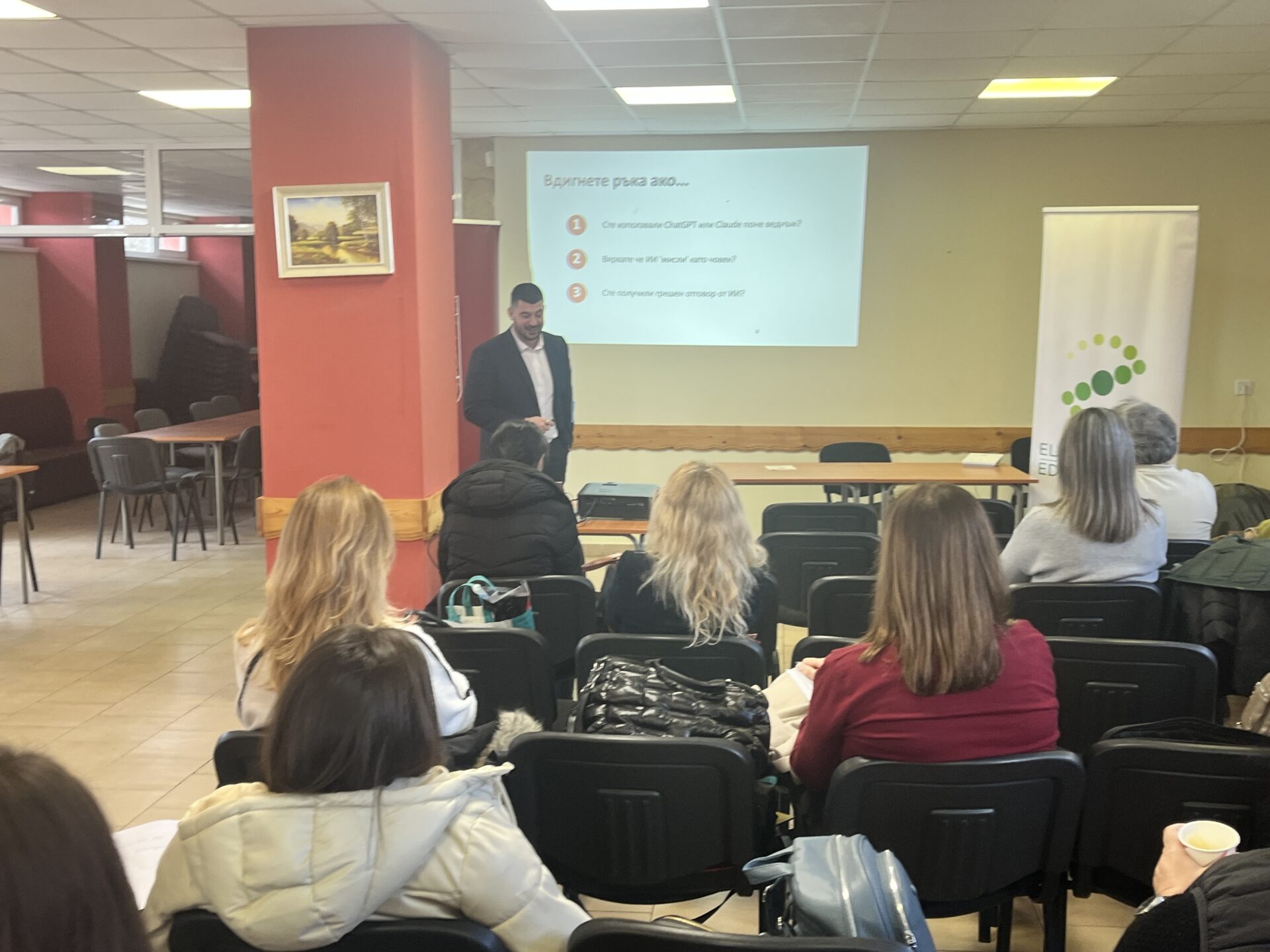
With the large-scale event “Digitalization, Investments, and Entrepreneurial Buzz,” ECIX Zagore celebrated its 5th anniversary on April 29. The space on the fourth exhibition level of the Regional History Museum in Stara Zagora brought together a conference and an exhibition area, where businesses, institutions, partner organizations, young talents, and experts gathered with the mission of connecting technologies and opportunities within a functioning ecosystem.
Young Talents and the Future of Work: Mission Possible
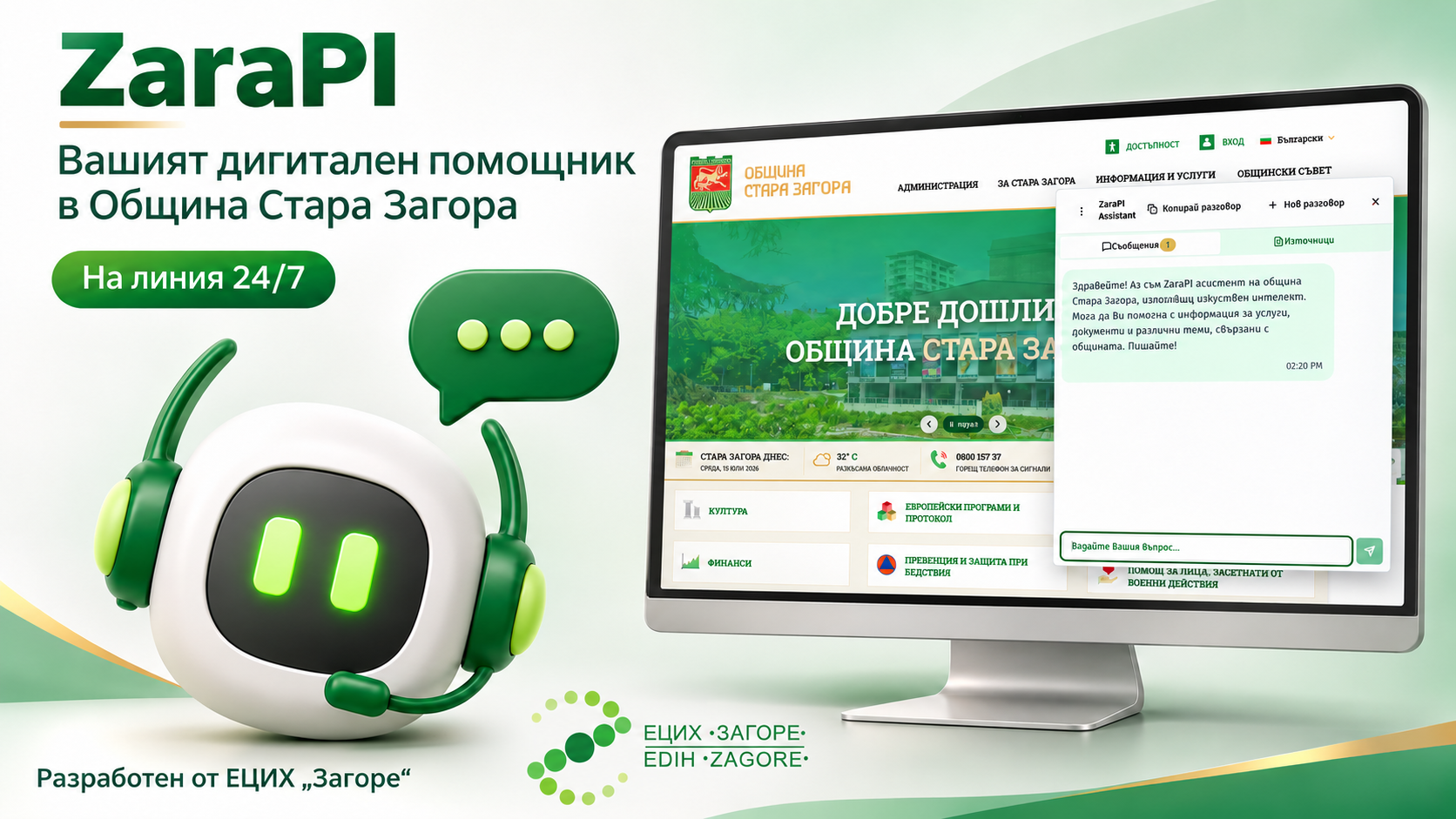
Young talents shouldn’t have to leave Stara Zagora—they have a future here too. That’s what we tried to demonstrate by developing software solutions with ECIX Zagore, said Dr. Rumyana Grozeva, Executive Director of SZREDA, a coordinating partner, at the opening of the panel “IT Jobs for Young Talents: Mission Possible,” Dr. Rumyana Grozeva, Executive Director of SZREDA, the coordinating partner of EDIH Zagore. The EDIH Zagore model for working with young professionals by involving them in real-world projects is one of the successful practices that the “Prof. Minko Balkanski” Vocational High School of Architecture, Civil Engineering, and Geodesy takes pride in, said Ms. Deyana Dimitrova, the school’s principal. “The motivation and discipline we developed during our training and work helped us stay consistent and strive for better results,” stated the young programmers who participated in the development of the Stara Zagora Municipality’s virtual assistant. The young people actively participated in reviewing documents, creating algorithms, and testing various user scenarios, and had the opportunity to experience a real-world work environment, seek solutions, suggest improvements, and see the results of their own work.
Georgi Gyokov, director of the “Employment Office” Directorate in Stara Zagora, outlined the opportunities available to young people and emphasized the need to create conditions for them to realize their potential at the local level. The topic naturally led to a discussion of innovative approaches to education, including VR technologies and new ICT models that bridge the gap between education and business. The team from the 3D Digitization Laboratory at the Institute of Information and Communication Technologies (IICT) of the Bulgarian Academy of Sciences (BAS) also participated in this session, and Ilian Raikov presented digital twins and their applications, including for the hydrogen equipment at ECIX Zagore. The panel concluded with a presentation of concepts for a smarter and more sustainable city from the Smart City Stara Zagora hackathon.

The goal of EDIH Zagore was once again to bring together businesses, institutions, the education sector, and young talents who already have real-world experience in digital projects. The discussion went beyond standard presentations and raised specific questions: how to reduce bureaucracy, how to facilitate connections between young people and employers, how digital solutions can streamline processes, and how the region can retain its well-prepared young people.


One of the main topics of the discussion was the need for more trust and fewer administrative barriers. Participants emphasized that complex procedures and excessive paperwork often create difficulties for both employers and young people taking their first steps into the labor market. It was precisely here that digitization was identified as a key tool—not only for automating processes, but also for creating a more transparent, fast, and efficient environment.
During the conference, digital solutions aimed at improving connections between job seekers, employers, and institutions were also presented – Skill Map AI, the future digital platform of the Confederation of Independent Trade Unions in Bulgaria (KNSB), designed to match individuals’ profiles with employers’ needs—a platform developed to support the region’s transformation processes. It enables the collection and analysis of information on skills, qualifications, and professional experience, helping both employees in their search for retraining opportunities and employers in finding suitable candidates. It creates a dynamic skills database and connects employers with suitable candidates based on their profiles, education, and interests. Given the need for workforce retraining, the solution offers a practical tool for adapting to new economic realities.
The discussion showed that digital transformation is not merely a technological process. It is also a social process that requires partnership, trust, and the active participation of all parties. Businesses need a skilled workforce, young people need real opportunities, and institutions need new approaches to make services more accessible and effective.
Among the key proposals that stood out was the idea of establishing a permanent forum for meetings between employers, vocational high schools, students, and institutions. Such a forum would help young people gain better information about job and career opportunities in Stara Zagora, while enabling employers to build earlier and more meaningful connections with future professionals.
The candid discussion at ECIX Zagore showed that the region has the potential, the ideas, and the people ready to work toward change. The strongest message from the event was that digital transformation will not happen through technology alone. It will happen through people—through the young talents who want to stay and grow here; through businesses that are ready to invest in them; and through institutions that can create the conditions for faster, easier, and more modern processes.
Digital Solutions for the Public Sector, Digital Solutions for Business
The Stara Zagora Municipality’s virtual assistant remained the focus of attention, as Svetoslav Kolev, deputy mayor in charge of “Finance, Budget, and Economy,” and Hristo Hristov from the EDIH “Zagore” team, presented its practical capabilities for improving communication with citizens and the efficiency of administrative services. “We like to make life easier for ourselves, which is why our goal is to save valuable time for both government agencies and businesses,” said Hristov, recalling the Smart Agent concept and discussing how artificial intelligence can be effectively implemented in business.
The most exciting panel, “From Bears to Bricks: The Digital Evolution of Business,” featured successful examples from SMEs supported by ECIH Zagore—AtePlast EOOD, K and Tech—Kanchev Injection Tech—and Dr. Diliana Terzieva were in the audience and spoke about solutions tailored to their businesses.


Veterinary medicine is literally on the verge of a revolution thanks to the possibilities offered by artificial intelligence—as evidenced by Dr. Terzieva’s development—the product is unique on the European market and recognizes most languages, allowing a patient’s medical history to be taken through natural conversation within minutes. Continuing its mission, EDIH Zagore is looking even further ahead, and Dr. Terzieva proudly announced that a clinic in Portugal has expressed interest in the solution.
Sustainable future: green technologies and solutions
The topic of sustainable development was also presented in the context of the strong partnership between ECIX Zagore and other projects and initiatives working toward the region’s green and digital transition. One of the highlighted examples was the COALition project, which promotes cooperation among organizations, experts, and stakeholders in the search for practical solutions for sustainable development, green energy, and adaptation to the changing economic environment.

In this context, emphasis was also placed on the partnership with “Green Balkans,” which demonstrated how digital technologies can extend beyond the realms of industry and business to find practical applications in support of conservation causes. The example presented—the use of unique 3D printers to create specialized joints for five wild birds—was a powerful and inspiring demonstration of how innovation can serve both society and nature at the same time.
Thanks to this technological capability and the effective collaboration among the partners, it has become possible to produce customized, precise, and lightweight components tailored to the specific needs of each bird. Following the successful intervention and subsequent care, the birds were returned to their natural habitat.
This example clearly demonstrated that sustainable development is most effectively achieved when various projects, organizations, and experts join forces. Through partnerships such as the one between ECIX Zagore, COALition, and environmental organizations, digital technologies become not only a tool for modernization but also a means for real change—in the economy, in society, and in nature conservation.


In high spirits and fueled by a dose of entrepreneurial buzz, those involved in the hub’s 5th anniversary looked forward to even more challenges and even more new opportunities in Hub 2.0!